Beyond Healthcare Electrification: Can Selling Excess Solar Energy Help Sustain Rural Health Facilities?
Can selling excess solar electricity help sustain rural healthcare facilities? CrossBoundary’s Mini-Grid Innovation Lab and Differ Community Power are testing this approach at two sites in Malawi, with funding from the Transforming Energy Access (TEA) platform. Part of the UK’s Ayrton Fund, TEA is funded by the UK government’s Foreign, Commonwealth & Development Office (FCDO) through its Global Research and Technology Development (GRTD) portfolio. Early findings show that electricity sales covered routine operating costs over five months while both facilities maintained reliable power, though long-term financial sustainability remains to be assessed.


Can selling excess solar electricity help sustain rural healthcare facilities? CrossBoundary’s Mini-Grid Innovation Lab and Differ Community Power are testing this approach at two sites in Malawi, with funding from the Transforming Energy Access (TEA) platform. Part of the UK’s Ayrton Fund, TEA is funded by the UK government’s Foreign, Commonwealth & Development Office (FCDO) through its Global Research and Technology Development (GRTD) portfolio. Early findings show that electricity sales covered routine operating costs over five months while both facilities maintained reliable power, though long-term financial sustainability remains to be assessed.
The challenge of sustaining healthcare electrification
Many healthcare facilities across sub-Saharan Africa still lack reliable electricity. Access to reliable electricity is critical for electricity renders approximately 70% of medical equipment inoperable, risks losing 50% of vaccine stockpiles, and healthcare facilities in Sub-Saharan Africa (SSA), as lack of increases travel times to functioning facilities by 25-50%1. In Malawi alone, approximately 680 healthcare facilities have no electricity, while a further 330 require backup power. Addressing these gaps is estimated to require nearly US$16 million in investment.
Solar power is an important solution for rural facilities far from the grid, but installation is only the first step. Systems also need funding for maintenance, repairs and replacement, and many projects rely on donor funding for installation alone.
What if healthcare facilities could use their existing solar systems to generate revenue that helps pay for their own electricity supply?
With funding from the Transforming Energy Access (TEA) platform, CrossBoundary Mini-Grid Innovation Lab is exploring whether the use of modular grid ‘Hub and Spoke’ set-up, coupled with an Energy-as-a-Service (EaaS) model, can be employed to successfully electrify healthcare facilities in Malawi, improve their energy efficiency and operations, while also supplying excess energy to surrounding communities to cover the ongoing operations and maintenance (O&M) costs for the hospitals.
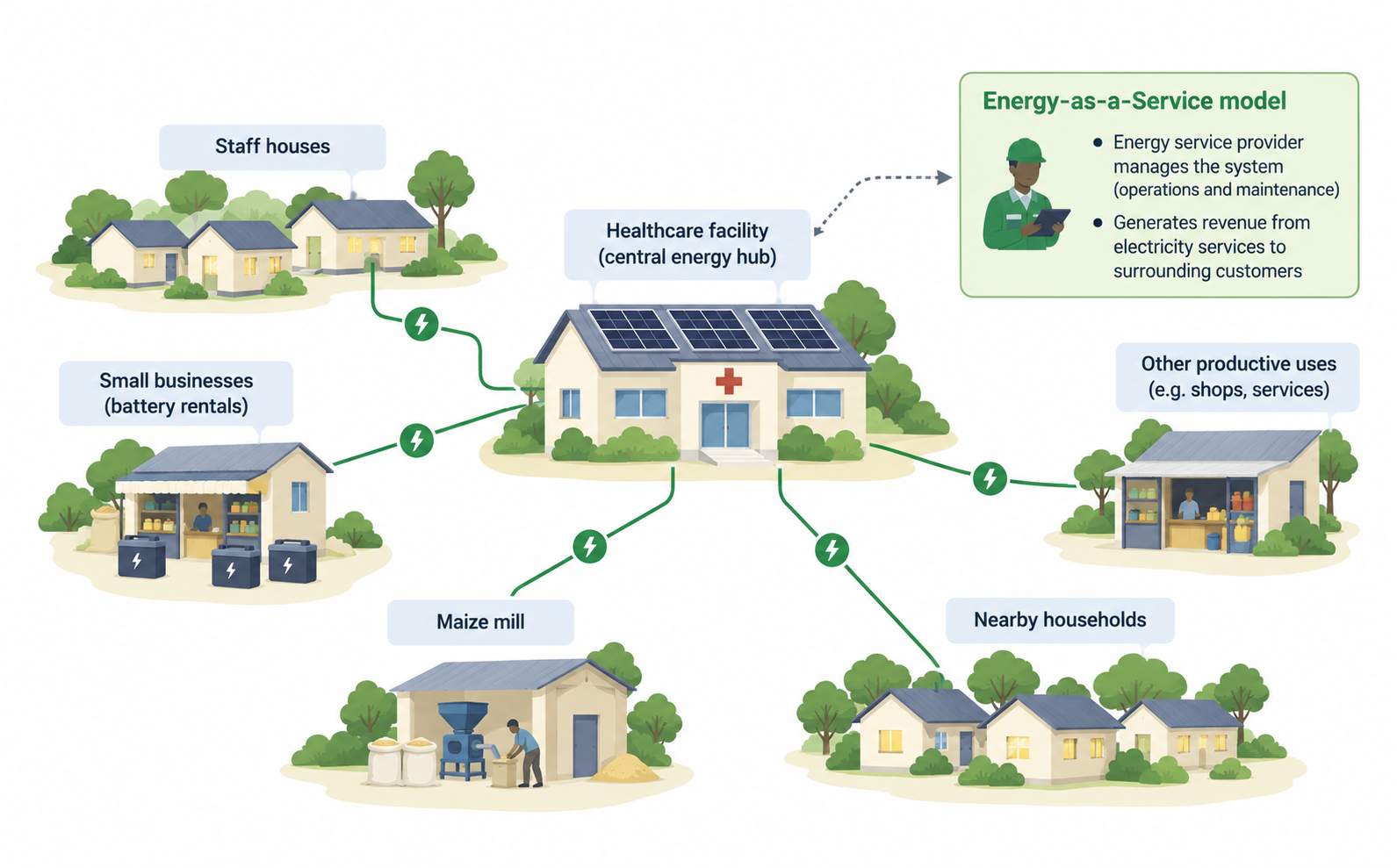 Figure 1: Hub-and-spoke model – the healthcare facility supplies power to surrounding customers, with an energy service provider managing the system
The Lab has been testing this approach with Differ Community Power (Differ) in Malawi across two rural healthcare facilities, Lemwe Health Centre and Mndinda Health Centre.
The study tests four hypotheses:
- Financial sustainability: Revenue from excess electricity can cover ongoing operating and maintenance costs.
- Cost efficiency: Modular grid CAPEX over the 20-year project duration will be 15% lower than mini-grid costs
- Operational efficiency: Consistent maintenance arrangements will reduce O&M costs by 20% and operation hours at the hospitals will increase by 20% as a result of reliable power supply.
- Electricity consumption: Reliable electricity access will increase consumption by 20% across healthcare facilities and surrounding communities.
How the model works: Turning excess electricity into revenue
To enable electricity sales to surrounding communities, Differ Community Power upgraded the existing solar systems at Lemwe and Mndinda healthcare facilities using a modular approach. At Lemwe, the existing battery was replaced with a new 15 kWh battery, while inverter capacity was increased from 5 kVA to 10 kVA. At Mndinda, the existing battery was replaced with a new 21 kWh battery, while inverter capacity increased from 8 kVA to 10 kVA.
Differ introduced three commercial activities: electricity connections to staff houses (a 1.6 kWh daily allowance, then pay per use), portable battery rentals for small businesses at a fixed monthly fee, and electric maize milling.
The Lab analyzed financial and operational data from May to September 2026 to assess how these activities performed and whether revenue covered operating costs.
Early results are promising – electricity revenues are covering costs at both sites
Our analysis of revenue, consumption and operating costs over five months shows excess electricity sales covered routine operating costs at both sites. Battery rentals brought in the most revenue and staff-house connections added steady demand, while maize milling struggled. Reliability held as consumption grew, though storage capacity limits growth at some sites, and remote monitoring helped keep costs down.
The findings below follow the four hypotheses.
Hypothesis 1: Financial sustainability is achieved for routine costs
Selling excess electricity can cover routine operating costs
Excess electricity refers to the electricity available from the solar systems after meeting the healthcare facilities’ energy needs. Both facilities generated sufficient revenue from selling this excess electricity to surrounding communities to cover their allocated operating costs in all five months reviewed.
Lemwe averaged $239 a month in revenue against $81 in operating costs, a surplus of $158. Mndinda averaged $157 against $61, a surplus of $96.
Combined, the two sites earned about $396 a month against $142 in operating costs, covering costs about 2.8 times.
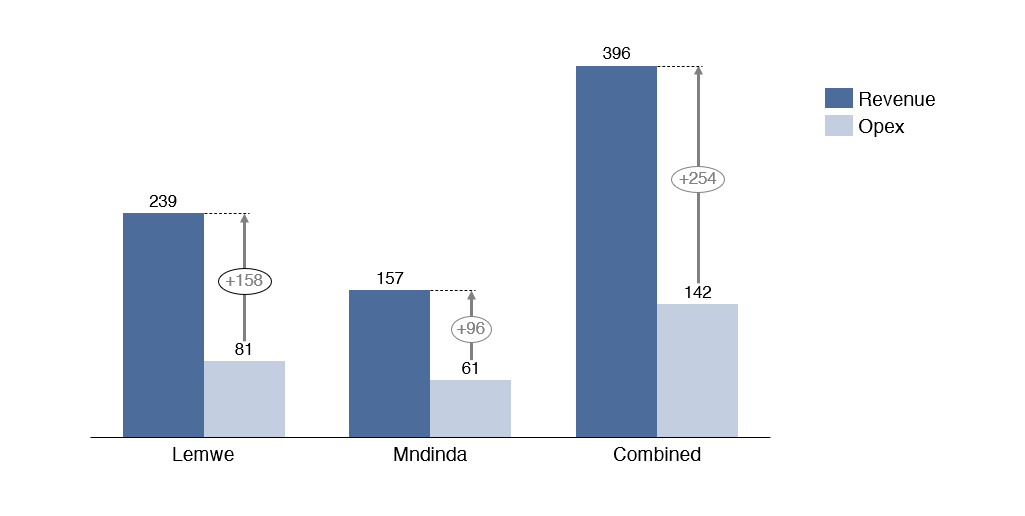
Figure 2: Average monthly revenue and operating costs over the period (USD/month)
However, covering routine operating costs is not full financial sustainability. More data is needed to assess whether revenue can cover major repairs, future battery replacements or the original capital investment.
Battery rentals have emerged as the strongest revenue source
Battery rentals generated about 56% of revenue across the two sites.Businesses pay MWK 40,000 (about $23) a month per battery. Lemwe rented out six batteries, earning about $137 a month. Mndinda rented out three to four, earning about $87.
Because the fee is fixed, effective revenue was $1.09–$1.41 per kWh. Fixed monthly fees give operators predictable income and reach businesses too far or too costly to connect directly. However, customers can return batteries at any time, so this revenue depends on continued demand.
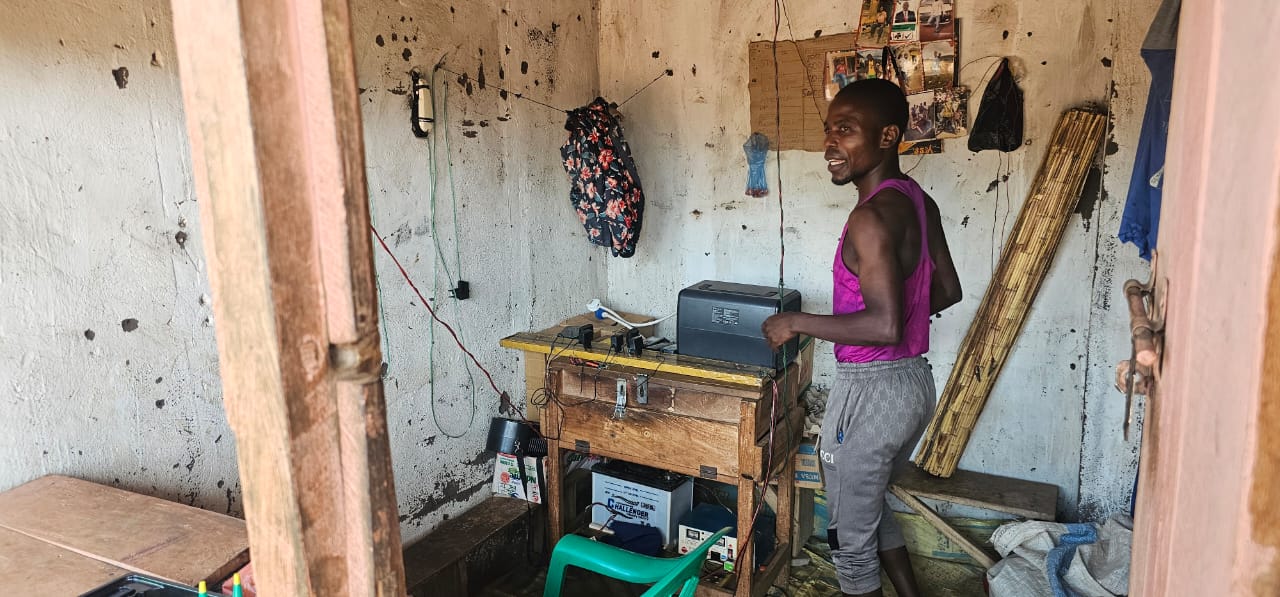
Figure 3: Battery rental model – A local barber uses a rented portable battery to power his business near one of the healthcare facilities
Staff-house connections provide stable and growing electricity demand
At Lemwe, monthly revenue from staff-house connections increased steadily, from approximately $40 in May to $120 in September 2026. At Mndinda, staff-house revenue remained relatively stable, ranging from $35 to $52 per month.
Productive-use activities need more than electricity to succeed
At Lemwe, milling revenue fell from $42 in May to zero in August and September, after a sieve was damaged and replacement parts were hard to find.At Mndinda, the mill earned $25–$35 a month until September, when it ran on only four days.
Some customers also preferred the larger diesel mills they already knew, echoing findings from the Lab’s study on electric grain milling. Providing equipment and electricity does not automatically create demand.
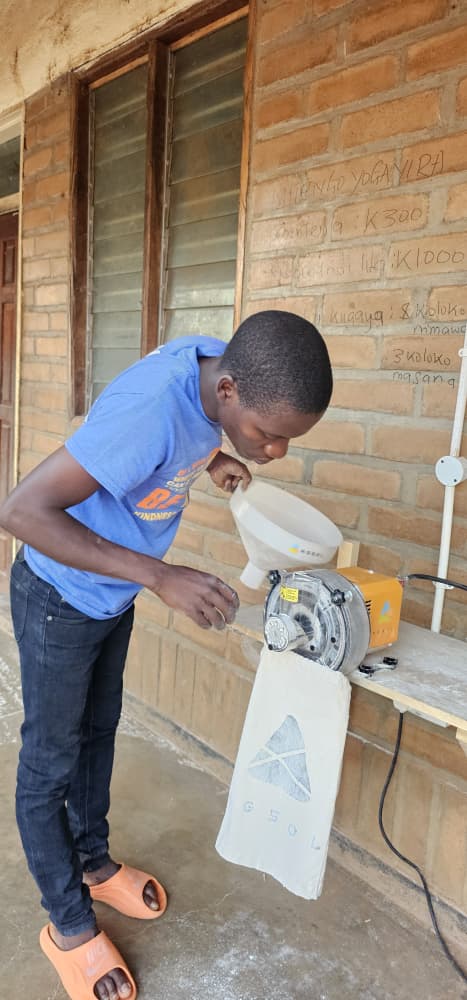
Figure 4: Grain mill business – A solar-powered electric maize mill introduced to provide milling services to communities surrounding the healthcare facilities
Hypothesis 2: Cost efficiency is yet to be assessed
Further consumption and expansion data is needed to assess whether modular grid CAPEX over the 20-year project will be 15% lower than mini-grid costs. This will be assessed later in the project.
Hypothesis 3: Reliability has held and remote monitoring is enabling operational efficiency
Additional electricity sales can be supported without compromising healthcare services
Both sites have kept about 99.9% electricity uptime over the five months.
Remote monitoring can help manage operating costs
Differ’s remote monitoring sends automated alerts, so some faults can be fixed without a technician visit. Mndinda had no repair spending over the review period and Lemwe spent $120 in May. Longer-term monitoring is needed to see how costs change as equipment ages.
Hypothesis 4: Electricity consumption has increased, but with mixed results
Consumption rose at both sites, but unevenly
At Lemwe, average daily consumption rose from a baseline of 7.15 kWh to 16.58 kWh, an increase of about 132%. At Mndinda it rose about 12%, from 9.90 kWh to 11.08 kWh.
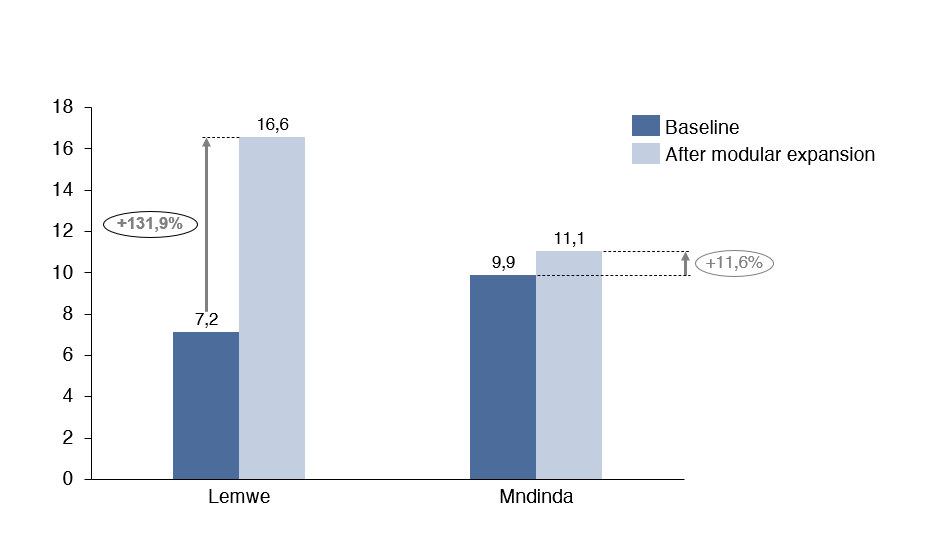
Figure 5: Average daily electricity consumption before and after modular expansion (kWh/day)
Available system capacity can limit opportunities to expand electricity sales
In September, Lemwe used about 91% of its battery storage, with batteries falling as low as 3% state of charge. Mndinda used about 30%, with a minimum of 48%. Lemwe’s limited storage could constrain extra evening demand without further investment, while Mndinda has room for new customers.
What do these findings mean for healthcare electrification?
Selling excess electricity to surrounding communities can help pay for the ongoing operation of healthcare solar systems. Three points stand out:
- Healthcare solar systems can serve a wider purpose than powering the facility. Selling to nearby households and businesses creates economic value and revenue for their upkeep.
- The choice of commercial activity matters. Battery rentals were the strongest revenue source and staff-house connections gave stable or growing demand. Maize milling shows that productive-use activities must fit local needs and have reliable equipment and maintenance.
- Expansion depends on the site. Demand, storage capacity, proximity to customers and operating costs all affect how much revenue a system can generate.
Revenue has covered the routine operating costs allocated to the electricity businesses, but long-term financial sustainability is not yet established. The proposed 15% cut in capital costs and 20% cut in O&M costs have not been assessed and need further cost data.
What’s next?
The Lab will keep working with Differ to track longer-term performance, including revenue, costs and demand, and will assess whether the approach can be replicated at other healthcare facilities.
The Lab is also exploring Healthcare Renewable Energy Credits (HRECs), which would let buyers purchase verified credits linked to renewable electricity supplied to healthcare facilities. The next step is to develop the HREC market framework, including verification and pricing, and assess its use in Malawi with the Government of Malawi, World Bank, SEforALL and the healthcare electrification working group.
For more information or opportunities to collaborate, contact [email protected].
Funded by

Related Insights
View all-
 Innovation Lab08.12.2025Article
Bridging Continents Workshop at COP30: Scaling Mini-Grid Solutions from Africa to the Americas
-
 CrossBoundary Advisory12.09.2024Blog
CrossBoundary supporting climate finance initiatives in Malawi
-
 CrossBoundary Advisory14.11.2023Blog
Africa Health Summit: a look at African healthcare progress and complications