Why do African women opt out of growth capital?
Across parts of Africa, women running viable businesses are making a deliberate choice to stay outside the formal credit system. The real question is whether the system is making them an offer they would actually say yes to.

Across parts of Africa, women running viable businesses are making a deliberate choice to stay outside the formal credit system. The real question is whether the system is making them an offer they would actually say yes to.
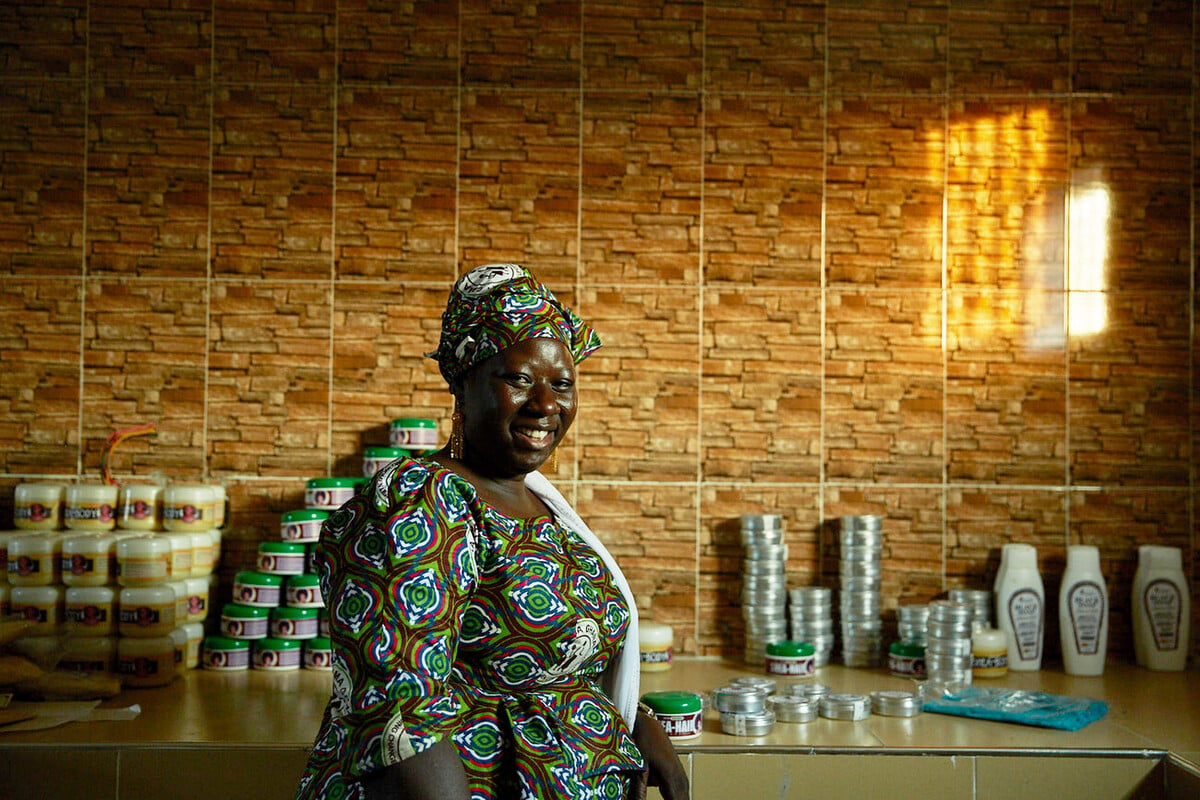
Ayisha Fuseini had been running Asheba Company Limited, a shea butter processing business in Tamale, northern Ghana, for over a decade before she took her first formal loan. She had built a business that processes over 40 tons of shea butter monthly, supports more than 700 rural women across her supply chain, and exports to international buyers. Her bank had followed her for years, asking her to bring her documents and apply for a loan, but she kept saying no.

Ayisha Fuseini, Founder, Asheba Company
Ayisha’s story is not unusual. Across West Africa, many women running viable, productive businesses stay outside the formal credit system. In Nigeria, women own approximately 41% of micro-businesses, yet only around 10% have access to formal credit, contributing to a significant financing gap for women-owned MSMEs. In Ghana, the picture is broadly similar. What this gap shows is a mismatch between the system on offer and the women it claims to serve.
Aishat Raji spent years as a leader within CrossBoundary’s Nigeria Advisory, working on access to finance for women-led businesses across West Africa. The barriers she identifies are not the ones the sector most often cites.“The fact that women don’t think they are bankable or creditworthy is one of the biggest barriers,” she says. “But where does that come from? It starts from the home. It extends to the community, to the workspace. It is a deeply embedded belief, and it doesn’t emerge from nowhere.”
Risk aversion, limited collateral, and financial literacy gaps are some of the most common explanations. But they are downstream of more structural issues: formal financial systems were not designed with women in mind, and women have largely understood this before the sector has been willing to admit it. Aishat traces this pattern of exclusion across every layer of a woman’s life, from households where economic decisions are not hers to make, to bank counters where credit officers spend less time assessing applications than persuading women to file one. The exclusion is internalized long before an application is ever filed.
Underlying these perceptions are structural barriers that continue to shape how women access finance. Collateral requirements sit at the centre of this. Formal lending in much of West Africa is built around fixed assets such as property, title deeds, and other forms of collateral. In contexts where land ownership is governed by inheritance norms that systematically exclude women, this requirement is not a neutral test of creditworthiness. It is a filter that removes women from the eligible pool before any assessment of their business performance takes place. In parts of Ghana, Nigeria, and other West African countries, women may have farmed land for generations without holding title to it. A loan application that begins with “bring us your land documents” has, in many cases, already ended.
Gloria Cabutey-Adodoaji, Group Head of Marketing at Zenith Bank Ghana and team lead for the bank’s participation in the BRIDGE-in Agriculture program, has seen this play out firsthand. She describes visiting a rural community to speak with women about financial access. The translator provided was a man. The women, she was told, were not able to speak without permission from their spouses. “Whatever decisions they had to make would be in tandem with their husbands.” By the end of the visit, her all-women team had not managed to speak directly with a single potential borrower. That encounter is extreme, but the underlying dynamic it represents exists at varying intensities across the region. In focus group discussions Zenith Bank conducted with women entrepreneurs, particularly from northern communities, a recurring finding was that when male partners co-signed or contributed security to a loan, they often subsequently demanded control over how the funds were used. As a result, the loan, taken out for a business, would be redirected with the woman still liable for its repayment.
This is what makes the opt-out rational rather than timid. Women are not failing to understand how credit works. They are understanding it quite well, and calculating that the terms — financial, social, and domestic — do not work in their favour.
—
In Northern Nigeria, there is an additional layer that formal finance has largely failed to design around. For many Muslim women entrepreneurs, conventional interest-based loans are not permissible under Shari’ah principles. What makes this particularly costly is that Shari’ah-compliant financing instruments such as Murabaha and Musharaka do exist and are offered by institutions including Jaiz Bank, Lotus Bank, and a growing number of fintechs. But as CrossBoundary’s paper on financing gaps for women-led enterprises in Northern Nigeria found, over 80% of women entrepreneurs at a roundtable convened in Kano were unaware that such alternatives existed. The product was available, but it had never been adequately communicated to the people it was designed to serve.
About Murabaha and Musharaka
Murabaha is a trade-based contract where a financial institution purchases goods or assets on behalf of a client and resells them at a pre-agreed markup.
Musharaka (Equity Partnership) operates as an equity-based contract where both the financial institution and the customer contribute capital to a business or project, sharing profits and losses in proportion based on a pre-agreed ratio.
Raji puts the broader point directly. “You will see an average Nigerian woman in the market trading pepper. You think it is only pepper. But actually, under her bed, she has ten million naira. She just does not look bankable to the average credit officer.”
—
The demand side of this picture is not without nuance. Fuseini — the same woman who avoided formal credit for years — will tell you plainly that women also have work to do. “Make yourself ready,” she says. “Keep your records. Pass your money through the bank. Only borrow what you need for the work.” She had spent years building a paper trail with audited financials, bank statements, and documented revenue. When she finally applied for a loan through BRIDGE-in Agriculture — a five-year blended finance program managed by CrossBoundary in partnership with the Mastercard Foundation, designed to expand affordable lending to agri-SMEs across Ghana — she qualified not because the program lowered its standards, but because she met them. Her prior discipline made her visible to a system that, for many women in her position, would not have seen her at all.
—
The BRIDGE-in Agriculture program works with six commercial banks across Ghana, deploying concessional capital at a 7% interest rate, which is a fraction of the high interest rates that women accessing informal credit or loan sharks routinely pay. Rather than anchoring eligibility to fixed assets, it structures collateral in ways that reflect how women actually hold and manage assets. It also embedded business development support as a deliberate pathway for women whose businesses were viable but not yet structured in ways that formal lenders could assess. Capacity building, financial training, and hands-on mentorship worked in tandem with the lending, ensuring that access to credit was matched with the tools to use it well.
The design was intentional from the start. Fanta Conde, Partner at CrossBoundary Advisory and the program’s lead architect, describes the founding conviction simply: “BRIDGE is built on the belief that lending to women is a commercially viable model. The platform exists to let banks see that for themselves.” That orientation shaped how the six partner banks were engaged. “If you want to do a program for a target that is majority women, you need to design for women,” she says. “You can’t build in the women factor as an option.”
All of the tier-one borrowers who accessed loans through Zenith Bank under the program were first-time borrowers. Among them was Fuseini. Within the first year of accessing her loan, her revenue grew by 85% — a number she moves past quickly, more interested in describing what changed in practice: the ability to hold stock, fulfil large export orders, and plan a season rather than react to one. She is now in active negotiations with lenders offering her competitive interest rates. “Banks are readjusting,” she says, with the confidence of someone who knows what her business is worth.
Cabutey-Adodoaji, who has watched similar transformations through Zenith Bank’s Z-Woman initiative — which offers reduced fees, lower interest pricing, and savings products designed around women’s business cycles — makes the commercial case without hesitation. “The incidence of default on women-owned businesses is way lower. When you are able to structure a facility to support women businesses, where the dynamics are clearly spelled out and it is inclusive of capacity development, those programs become a game changer.”
—
The evidence on what works is documented. CrossBoundary Advisory’s work through BRIDGE-in Agriculture offers a practical template: blended finance structures that bring interest rates within reach, collateral mechanisms that do not require women to gamble their households, and business development support that builds the pipeline rather than waiting for it to arrive fully formed. Zenith Bank’s partnership with the African Guarantee Fund — through which women-owned businesses access up to 75% security support, with a savings product designed around their business cycles covering the remainder — shows that commercial banks can adapt their architecture without abandoning their mandate.
The demand is not the constraint. Raji made the case that women are already in the market, already generating revenue and managing financial risk with more discipline than the system gives them credit for. “Invest in the capacity building and the pipeline development for women-led businesses,” she says, “and just watch the lines fall in pleasant places.”
What Fuseini’s trajectory makes clear is that the relationship between women and formal finance is not fixed. Within a year of her first loan, she had grown her revenue, fulfilled contracts she previously had to turn away, and positioned herself to negotiate her next financing on her own terms. For financial institutions and development finance actors serious about closing the gender financing gap in West Africa, the question is whether the products, terms, and processes on offer are ones that women would actually say yes to.