What we give, we grow: women in Ghana’s agricultural economy
On International Women's Day 2026, BRIDGE-in Agriculture celebrates the women who received a hand — and immediately extended one to others. Meet Juliana, Yvette, and Gloria: three Ghanaian women whose businesses are growing, and whose first instinct has been to bring others along with them.

On International Women's Day 2026, BRIDGE-in Agriculture celebrates the women who received a hand — and immediately extended one to others. Meet Juliana, Yvette, and Gloria: three Ghanaian women whose businesses are growing, and whose first instinct has been to bring others along with them.
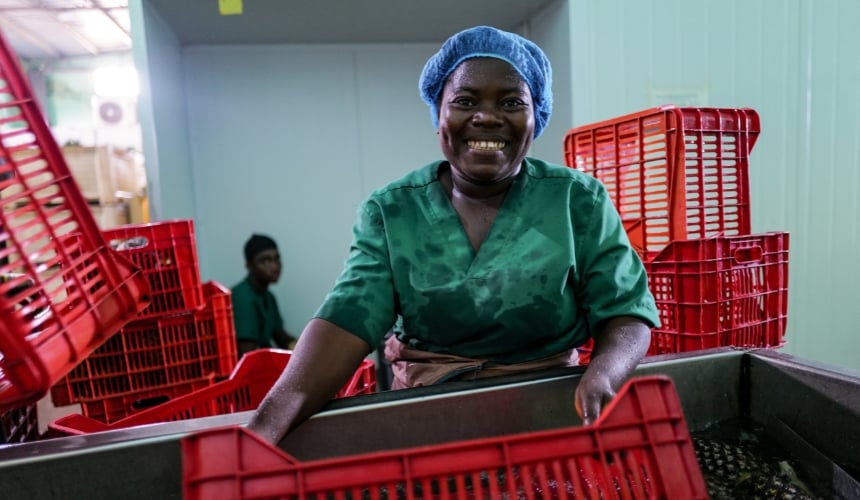
There is a quiet economy running beneath the surface of Ghana’s agricultural sector. It moves in the early morning, when a coconut farmer in Awutu Breku harvests twice as many fruits as she did last year. A woman she supplies gave her a steady contract, and the confidence to scale. It pulses in a soap-making workshop in Accra. There, a woman with albinism — once turned away from job after job — now teaches others how to build a livelihood. It hums in a factory in Nsawam, where 70 workers, most of them young women, are processing dried fruit for international shelves.
From a Handful of Coconuts to a Regional Enterprise
Juliana Kegya grew up watching coconut farmers in Awutu Breku, Central Region, struggle to sell what they harvested. The missing step seemed to be between the farm gate and the finished product. People in Ghana rarely focused on processing the coconut into a finished product.
So she did.
In April 2023, Juliana founded Jukeg Ventures Limited. The company produces coconut oil, coconut copra feed, and coconut shell charcoal. But early momentum was hampered by insufficient capital. Without affordable financing, Jukeg was producing 800 litres of coconut oil a month. According to Juliana, that was just enough to survive.

BRIDGE-in Agriculture‘s affordable financing unlocked new perspectives for Juliana. Jukeg accessed a loan from Stanbic Bank. Through these funds, Juliana invested in equipment, raw materials, and people. Output climbed to 4,500 litres per month. A second press line cut processing time by 40%. This growth enabled the company to service clients like supermarkets and ECOWAS export partners. It also enabled Jukeg to sell copra feed more regularly to Poultry farmers.
“We weren’t just surviving; we were suddenly thriving. I saw that with the right resources, Jukeg Ventures could compete with bigger players.” —Juliana Kegya, Co-Founder of Jukeg Ventures

As the business grew, so did the impact on the lives of people.
Seven young women between the ages of 31 and 35 now work in Jukeg’s production and packaging lines. They have reviewed salaries, basic health insurance, and a say in decisions that affect them. Last year, the team collectively shaped a 15% pay increase and a benefits package prioritizing children’s healthcare—two things the women themselves identified as what would make a real difference.
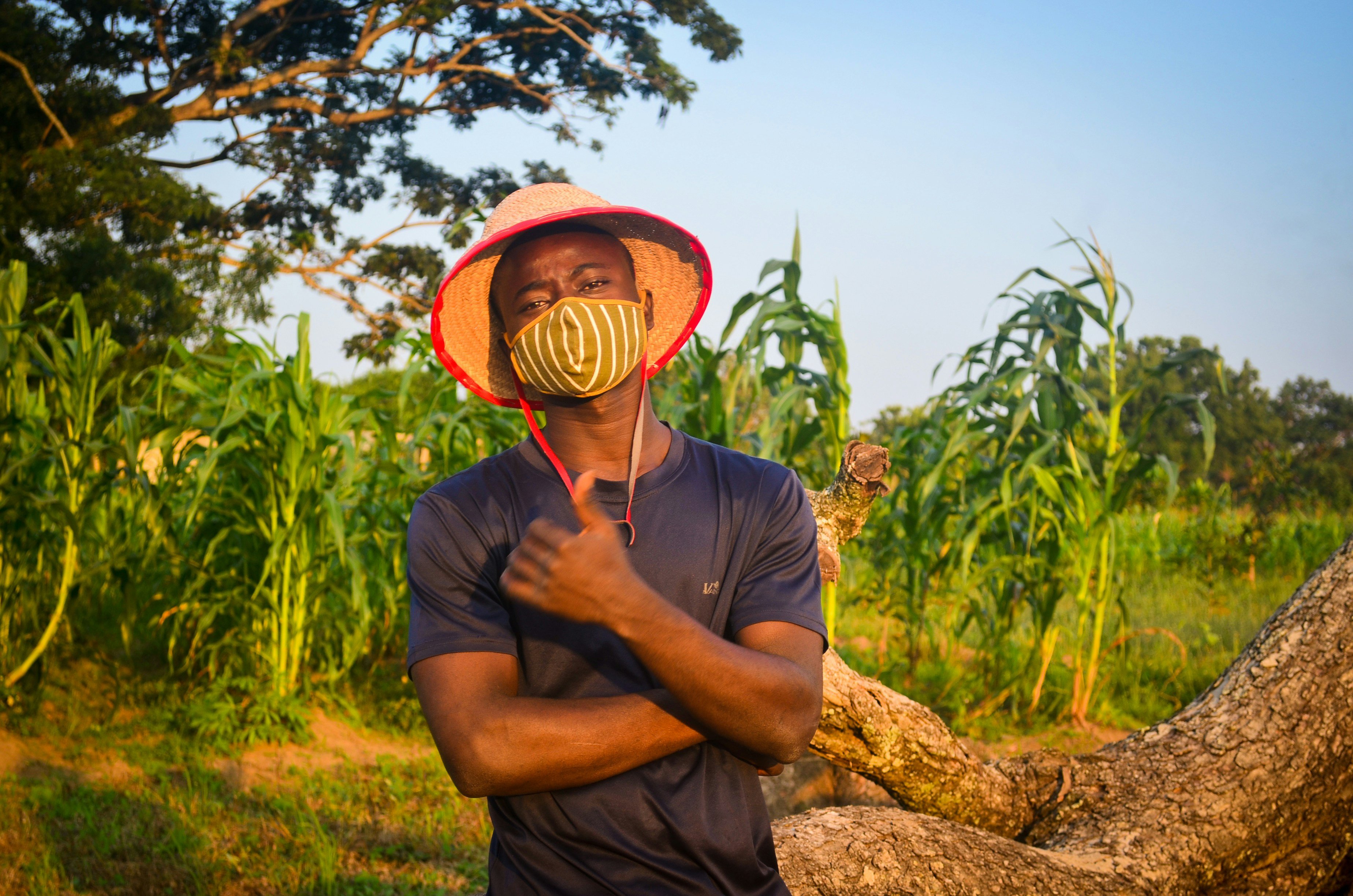
Among Jukeg’s suppliers is a woman named Akua, who started by delivering 15 coconuts a week. She now supplies 200, and that income is funding her family’s education.
“When women earn, they often reinvest in their communities. I’ve seen it firsthand. Women we hired are now supporting their kids’ education, starting small businesses of their own,” says Juliana.
Juliana traces her own drive back to her grandmother: a baker, a trader, a woman who rose at 4 AM and kept going through the tough days. That inheritance of resilience, passed from woman to woman, sits at the heart of Jukeg’s culture. She is already thinking about the next generation of women entrepreneurs she wants to see Jukeg’s success inspire.

Building Something That Didn’t Exist Yet
When Yvette and her co-founder Emmanuel started Pure and Just Company Limited in 2018, they were not filling a market gap so much as creating one. Ghana had no shortage of fresh fruit. What it lacked was the infrastructure to turn fruit into shelf-ready, export-quality dried products. And the ambition to believe Ghanaian entrepreneurs could build it.
They started the way many founders do: in the kitchen, pooling savings to buy a tabletop dehydrator, going to markets and farms themselves, doing every job. Eight people became 24. Twenty-four became, today, 108.
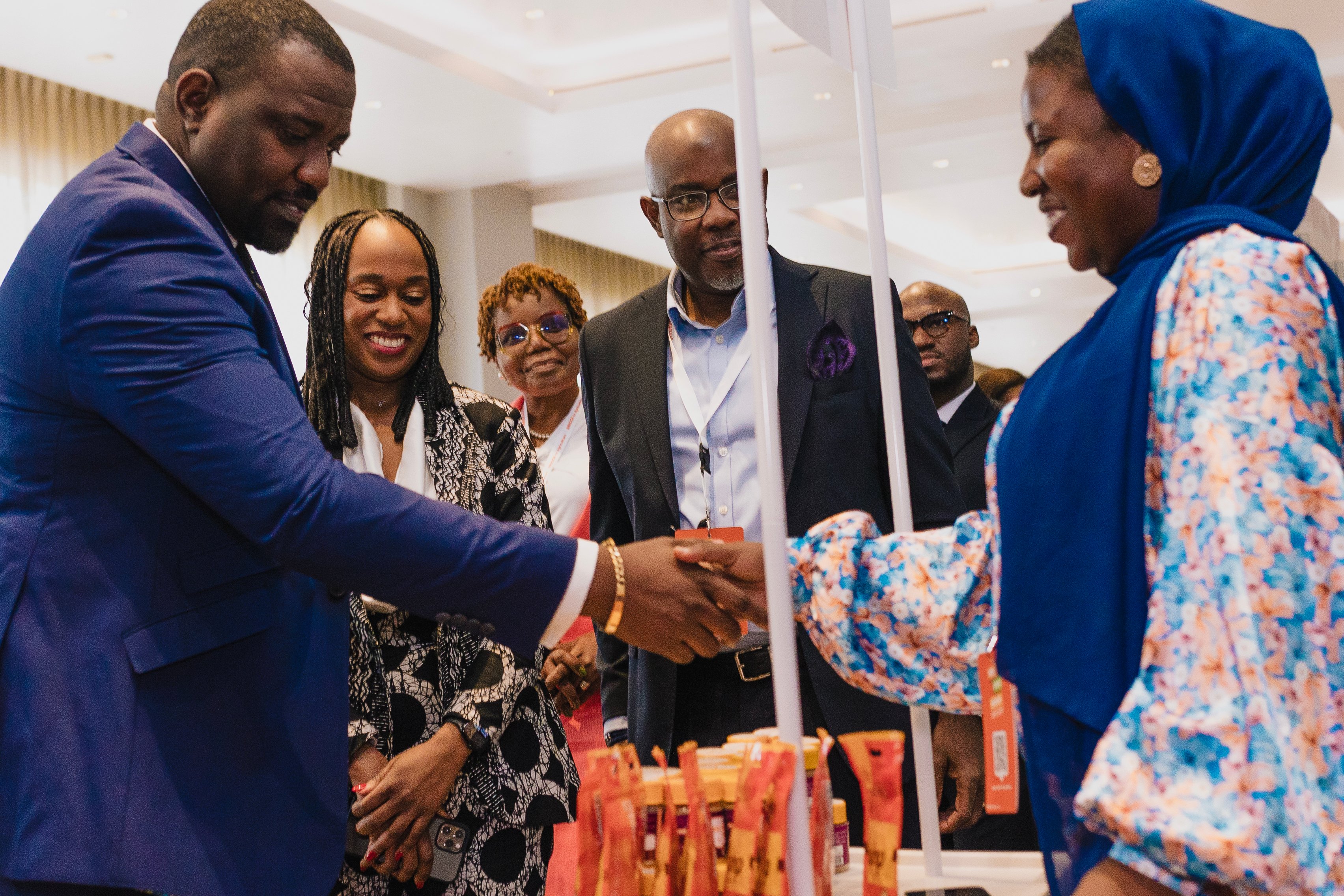
Access to financing was among the most persistent challenges. International trade does not wait for cash flow to catch up; buyers expect product before payment clears. Last year, Pure and Just reached out to Stanbic Bank and secure a low-interest loan, under the BRIDGE-in Agriculture program.
“The financing has been catalytic. It really has helped us to operate in the international market.” —Yvette Dickson-Tetteh, CEO of Pure and Just Food.
Of Pure and Just’s 108-person team, about 60% are women. Pure and Just made a deliberate choice to generate opportunities where they were historically thin. The accommodations may seem small — sanitary products in bathrooms, flexible maternity leave, time off for breastfeeding. But they signal a workplace that has thought about who works there, and what they actually need.

The outcomes are real. An M&E manager who joined the team, rotated through the factory, the office, and the field, and has since gone on to pursue a master’s degree. Staff have better access to healthcare because of private health insurance. As Yvette frames it, these people now have the certainty and the means to determine their future.
Yvette is honest about her personal journey too. In her experience, gender discrimination was neither blunt nor common; no one hindered her from pursuing this business. But she noticed the absence of women she could look up to and build on. Then she saw a video of Afiong Williams, a dried fruit entrepreneur in Nigeria, interviewed on international television. They had never met, but seeing someone who had done it was enough.
“It wasn’t like I had a manual for what to do. But it was enough to see that someone was doing it. And that was super encouraging,” says Yvette.
They are close friends now. That glimpse of possibility between two women who had never spoken is one of the most generous things a person can offer: proof.

The Gift That Multiplies
Growing up with albinism in Bolgatanga, Upper East Region, Gloria Awuni faced compounded obstacles. The vision challenges common to people with albinism, combined with deep-rooted misconceptions about what people like her were capable of, closed door after door. She spent a year in caregiving work, hoping to save enough to train as a pharmacist. The savings never came. The discrimination was too consistent, the opportunities too scarce.
Then a friend told her about a soap-making training being offered through Mind Builders Africa, part of the BRIDGE-in Agriculture program. The timing was right. The honey and shea butter were moving slowly, so Gloria went.
The training changed Gloria’s economic life. She launched a soap production business, generating steady income for the first time. With that income, she financed her younger sibling (who also has albinism) through kente-making training. She pays for her two children’s schooling.
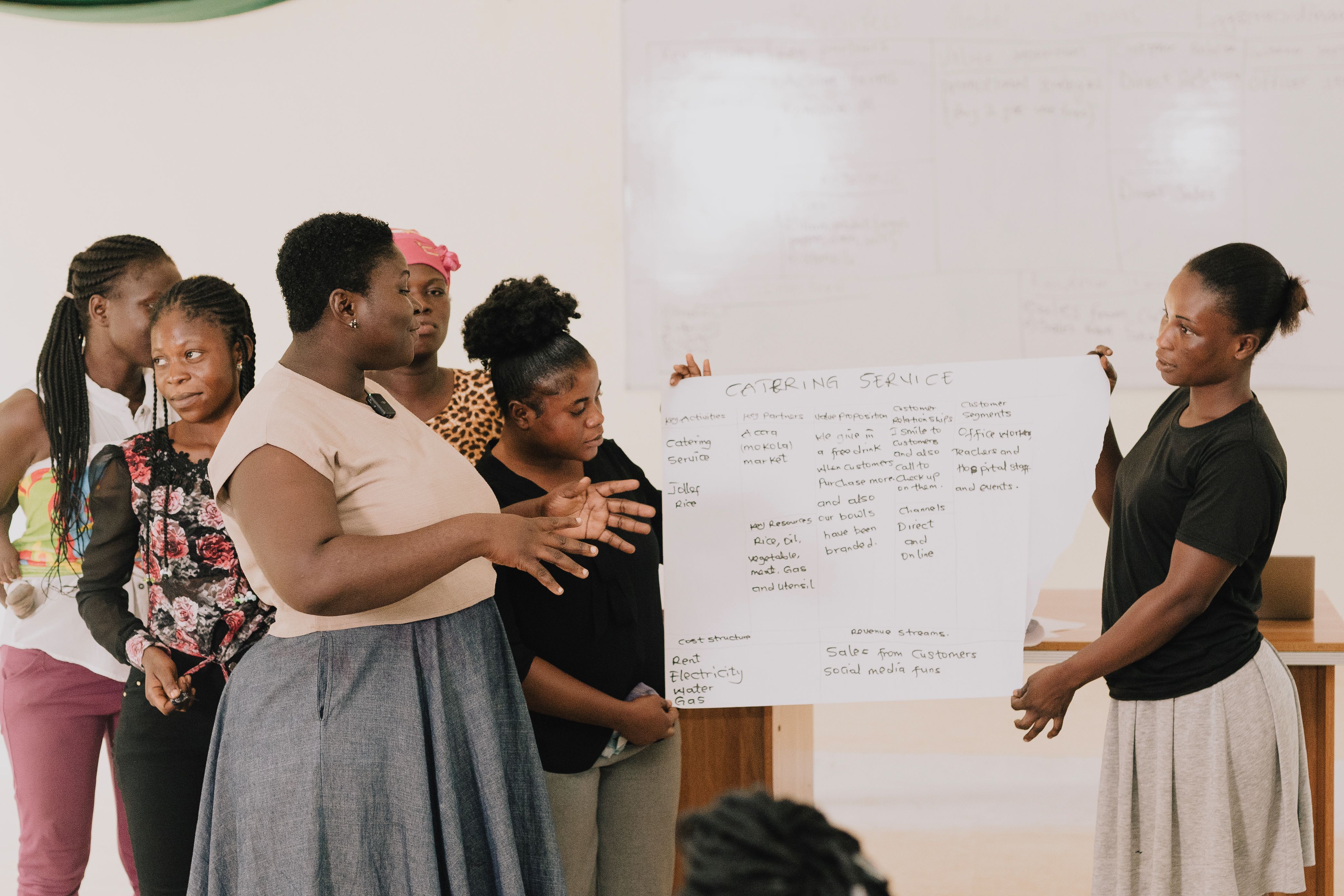
When Gloria returned to Bolgatanga, she made it her mission to teach other people with disabilities how to make soap and build a livelihood. Back in Accra, she taught a woman in Nsakina the same techniques because she understood what a skill in your hands can do for your life, and she wanted others to have that.
“I want to use this opportunity to encourage persons with disabilities to always take advantage of programs and opportunities for training. They will change your lives, just as they have changed mine.” —Gloria Awuni, soapmaker
Gloria’s story is, in some ways, the purest expression of this year’s International Women’s Day theme. She received a skill, and she gave it away whenever she could.
The Multiplier
Juliana, Yvette, and Gloria move in different value chains, come from different regions, and built their businesses through different routes. But their stories share a common architecture: each woman received something, and their first instinct was to pass it on.
Research consistently shows that when women gain economic agency, they reinvest in the people and systems around them at rates that outpace their male counterparts. What these three stories show is what it looks like up close: in a supplier who goes from 15 coconuts a week to 200; in an M&E manager who uses a factory job as a springboard to postgraduate study; in a woman in Nsakina who can now care for herself independently.
BRIDGE-in Agriculture, a Mastercard Foundation initiative implemented by CrossBoundary Advisory and a consortium of banks and business development services, was designed with this multiplier in mind. By bridging the gaps in affordable finance, skills development, and business support that have historically held back women and young people in Ghana’s agricultural sector, the program creates the conditions for this kind of rolling effect. Learn more about BRIDGE-in Agriculture.
This International Women’s Day, we celebrate what these women have given. Because in the end, the most powerful investments are the ones that keep paying forward.
Related Insights
View all-
 CrossBoundary Advisory12.08.2025Blog
From Last Resort to First Choice: Youth Redefining Agriculture in Ghana
-
 CrossBoundary Advisory29.05.2025Press Release
BRIDGE-in Agriculture Initiative Targets Young Women to Lead Ghana’s Agribusiness Transformation
-
 CrossBoundary Advisory12.08.2024Blog
Strengthening Ghana’s youth-led farming ventures through the BRIDGE-in Agriculture program